

a

For those of you who didn’t know July is Minority Mental Health Awareness Month. It is my belief now more than ever that it is important to recognize how mental health is affecting minority populations. Many people today live with undiagnosed mental illness and there are some with diagnoses that are not receiving treatment. No matter if you or one of your loved ones suffer from mental illness there is something that we all can do, especially during Mental Health Awareness Month.


Presented as a bill to the House of Representatives in 2008 by Representative Albert Wynn from Maryland, the bill aimed to not only formally recognize July as Minority Mental Health Awareness Month, the bill also sough to enhance public awareness of mental illness and specifically mental illness among minorities and improve access to mental health treatment and services and to increase public awareness of mental illness. This bill sought to further the advocacy and information that was being shared by noted author and mental health advocate and survivor Bebe Moore Campbell.

Bebe Moore Campbell, the late author, mental health advocate and co-founder of National Alliance on Mental Illness or NAMI, was a proponent of July being recognized as the month were minority mental health should be highlighted. Campbell, who suffered from mental illness herself was very outspoken about her journey as well as the importance of eliminating family stigma and quality care. More than access to care, the purpose of Minority Mental Health Awareness Month has been being able to be open about mental illness and removing the stigmas attached to having mental illness. While it has been almost 10 years since Minority Mental Health Awareness Month was recognized by Congress there is still a great deal of work that needs to be done in the areas of mental health and mental health awareness.

The statistics are staggering; 1 in 10 children and 1 in 5 adults suffer from mental illness in America. 1in 10 children! Even more alarming than the numbers is that fact that the majority of persons living with mental illness in the United States will not seek any type of treatment. Even now minorities are less likely to get the diagnosis and treatment the need. They are also less likely to have access to mental health services and have mental health services available to them. Often when the do have access to and receive care it is of a subpar quality compared to majority populations.

The facts and the statistics surrounding minority mental health are staggering. 1 in 10 children in the United States is affected by mental illness. There are thousands of people living with mental illness that are going treated and worse yet undiagnosed. Those who often need mental health services the most do not have access to those services. Everyone may not be able to do the same thing, but we can all do something.
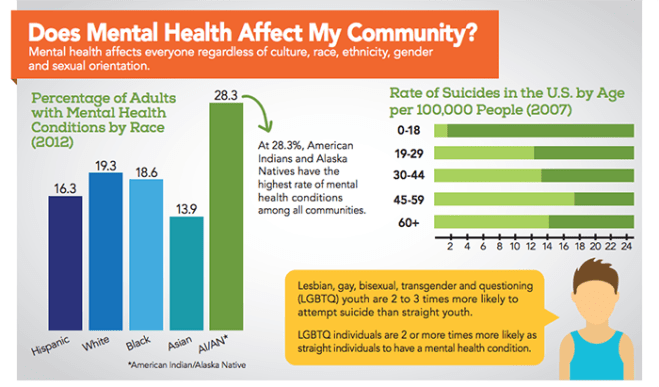 As single professional women, many of us have been affected by mental illness, or either someone in our family or someone we know has been affected by mental illness. Many of us have ourselves been treated or need to be treated for mental health issues. The sad truth of the matter is that many people suffer in silence. This needs to become the exception and no longer the rule. Below is a list showing you signs that someone you know may need help.

If you or someone you know is suffering from mental health know that there are organizations out there who can and will help. We do not have to suffer in silence. Let us all do what we can to assist others in fighting their battle with mental illness.
 Resources:

 This Single Sole